Endurance athletes know that performance isn’t just about training—it’s about how the body manages fatigue, muscle damage, and recovery. Katsuo Stamina is the first Japanese-engineered supplement to combine clinical validation with real-world race results, offering athletes a measurable edge.
Race-Backed Performance Data
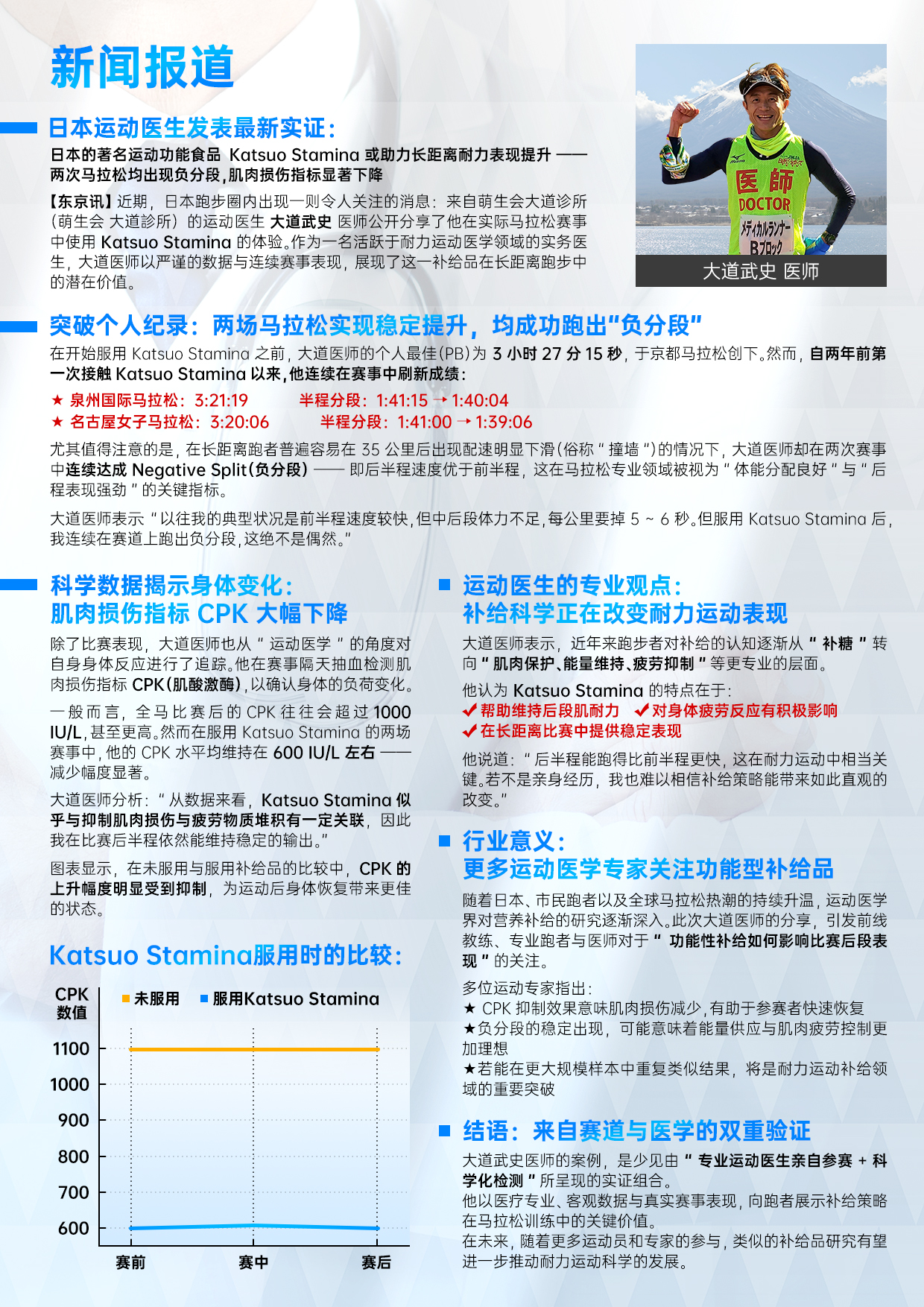
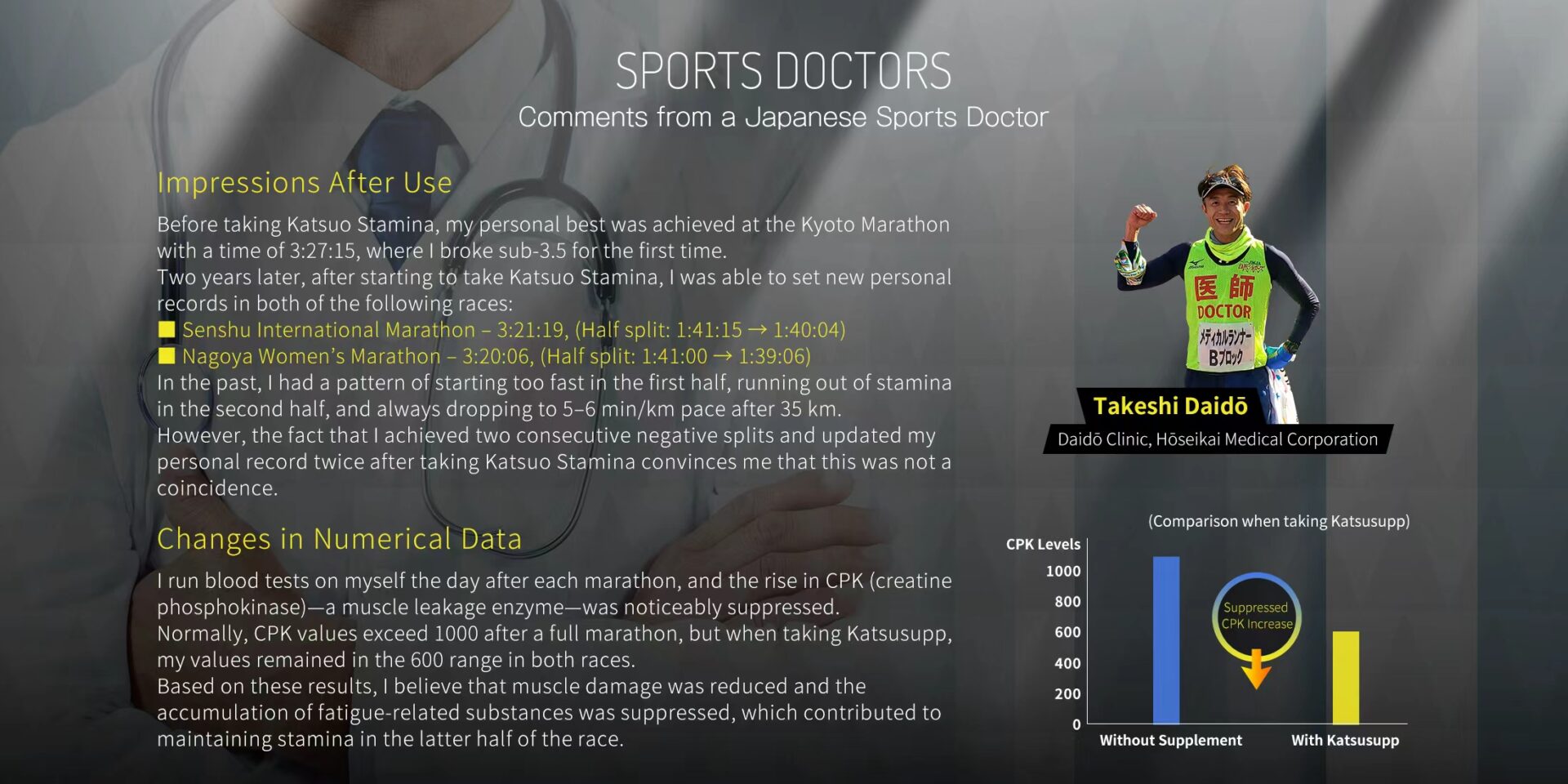
Dr. Takeshi Oomichi, a Japanese sports physician and marathoner, demonstrated the impact of Katsuo Stamina across multiple events:
Event
Before Katsuo Stamina
With Katsuo Stamina
Senshu Marathon
3:27:15
3:21:19
Tokyo Marathon
—
3:20:06
Half Marathon (case 1)
1:41:15
1:40:04
Half Marathon (case 2)
1:41:00
1:39:06
Key highlight: Both marathons were run with negative splits, a gold standard of endurance pacing.
Biochemical Evidence: Muscle Protection
The science behind Katsuo Stamina lies in its ability to reduce muscle damage markers:
Creatine Phosphokinase (CPK), a key enzyme released when muscle fibers are damaged, dropped significantly:
Without Katsuo Stamina: ~1000 IU/L
With Katsuo Stamina: ~600 IU/L
This ~40% reduction indicates less muscle trauma, faster recovery, and the ability to sustain higher training loads.
Mechanism of Action
Katsuo Stamina’s core ingredient is Migratory Fish Extract, a peptide composed of β-alanine and methylhistidine. Together, they:
Buffer lactic acid → delaying fatigue during long efforts.
Protect muscle fibers → reducing micro-tears and soreness.
Accelerate recovery → enabling consistent training blocks.
Nutritional profile (per 4 tablets, 1.6 g):
Energy: 6.29 kcal
Protein: 0.49 g
Carbohydrates: 1.06 mg
Sodium: 0.006 mg
Industry Credibility
Dual certification: Katsuo Stamina is Asia’s first endurance supplement to pass Informed-Sport and Informed-Choice non-doping certifications.
Adoption trend: Endurance coaches and sports physicians are increasingly recommending functional supplements to bridge the gap between training and recovery.
Why It Matters
For athletes chasing PRs, podiums, or simply more durable training, Katsuo Stamina offers dual validation:
Race outcomes (negative splits, faster times)
Medical data (lower CPK, reduced muscle damage)
This isn’t marketing hype—it’s measurable science applied to endurance performance.
Katsuo Stamina is not just a supplement; it’s a performance system that combines clinical safety, biochemical efficacy, and proven race-day results.
Running a marathon in Berlin or Tokyo is hard. Running one in Malaysia is a different beast entirely. Between the humidity of the KLSCM (Standard Chartered KL Marathon) and the scorching tarmac of IRONMAN Langkawi, the tropical heat is the number one reason athletes DNF (Did Not Finish).
In high humidity, your sweat doesn’t evaporate effectively, meaning your body temperature spikes and you lose electrolytes at an alarming rate. Water alone isn’t enough—in fact, drinking too much plain water can lead to hyponatremia (water intoxication).
Here is the 2-step “Heat Survival” protocol used by elite Malaysian runners.
Step 1: Precision Hydration with ELEC Stamina
Forget sugary sports drinks that slosh around in your stomach. To survive the heat, you need to decouple your hydration (water) from your electrolytes (salts).
ELEC Stamina tablets are designed specifically for heavy sweaters.
Full Spectrum Minerals: Unlike basic salt pills, ELEC provides a balanced ratio of Sodium, Potassium, Magnesium, and Calcium to prevent the muscle cramps that strike when minerals are depleted.
Metabolic Boost: We’ve added Vitamin B1 and B2 to the formula. Why? Because in high heat, your metabolism works overtime. These B-vitamins help convert carbohydrates into energy, ensuring you don’t bonk while trying to stay hydrated.
Strategy: Take 1 tablet every 10km (or every 45-60 minutes) with water.
Step 2: Muscle Preservation with QC Stamina
Heat stress increases cortisol, which puts your body in a catabolic state—meaning it starts eating its own muscle tissue for fuel. This is why you feel “hollow” or weak late in a hot race.
QC Stamina (Quick Charge) is your defense shield.
It delivers Hydrolyzed Collagen and BCAAs in a rapidly absorbing form.
Why Collagen during a race? It protects your ligaments and tendons, which take a beating on hot, hard road surfaces.
Strategy: Take one packet of QC Stamina at the halfway point of your race to prevent muscle breakdown without stressing your stomach.
The Verdict
Don’t let the Malaysian weather dictate your performance. By managing your electrolytes with ELEC and protecting your muscles with QC, you can cross the finish line strong, no matter what the thermometer says.
Walk into any supplement store and you’ll see walls of BCAA products. For gym training and muscle building, BCAAs work well. But if you’re a marathoner, triathlete, or ultra-runner—do BCAAs address your actual needs?
At Stamina Sports, customers frequently ask: “Is Katsuo Stamina just another BCAA?“
The answer: No. While both support recovery, they operate through completely different biological mechanisms suited to different athletic goals.
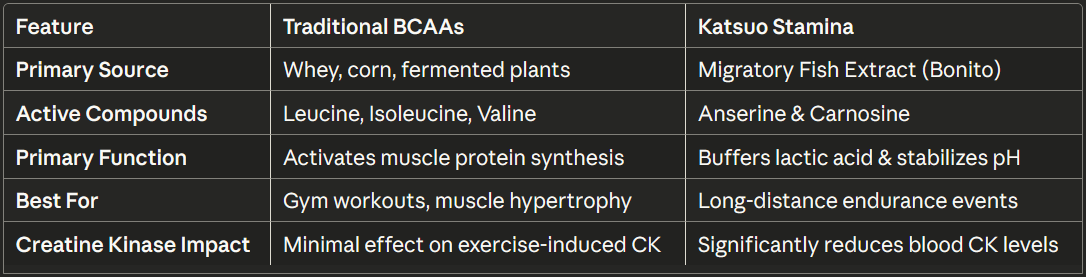
Quick Comparison Overview
Understanding the Core Difference
BCAAs = Building Blocks Traditional BCAAs (Branched-Chain Amino Acids) trigger muscle protein synthesis—telling your body to build and repair muscle tissue. This makes them ideal for strength training and bodybuilding where the goal is muscle growth.
Katsuo Stamina = Performance Optimizer Katsuo Stamina uses bioactive dipeptides (Anserine and Carnosine) from migratory fish that naturally swim thousands of kilometers. These compounds:
Recycle lactic acid back into usable energy instead of just building muscle
Buffer muscle pH to delay the “burn” during sustained efforts
Reduce muscle damage markers (creatine kinase) after long races
You compete in marathons, triathlons, ultra-running, or cycling
You need faster recovery from endurance training
Can You Use Both?
Yes. Many endurance athletes use:
BCAAs post-workout for muscle repair
Katsuo Stamina before/during races for lactic acid management
This combination addresses both muscle building AND endurance-specific performance needs.
BCAAs and Katsuo Stamina aren’t competitors—they solve different problems. For endurance athletes in Malaysia facing long distances and tropical heat, Katsuo Stamina’s lactic acid buffering and pH stabilization offer advantages traditional BCAAs can’t match.
Every endurance athlete knows the feeling. You are at the 30km mark of a marathon or the final leg of a triathlon, and your legs start to feel heavy—like they are filled with lead. That burning sensation is what most of us call “hitting the wall,” and for decades, we’ve blamed one culprit: Lactic Acid.
But what if we told you that lactic acid isn’t waste? What if it’s actually fuel waiting to be used?
The Science: Lactic Acid is Energy in Disguise
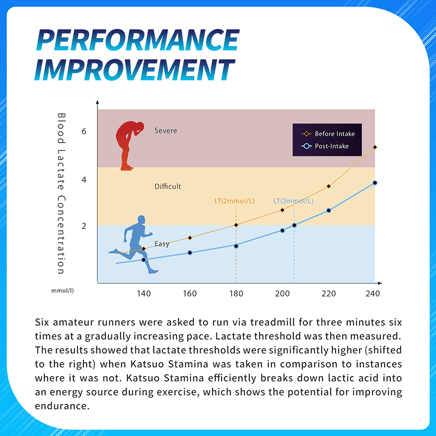
In traditional sports science, lactic acid was viewed as a toxic by-product that needed to be flushed out. However, modern research—particularly from Japan—has shifted this paradigm. Lactic acid (or lactate) is a potent energy source. The problem isn’t the production of lactate; it’s that your body produces it faster than it can process it. When this backlog happens, hydrogen ions accumulate, lowering the pH in your muscles and causing that familiar burning sensation.
If you could clear that backlog efficiently, you wouldn’t just stop the burn—you would unlock a massive reserve of energy.
Enter Katsuo Stamina: The Migratory Fish Secret
This is where Katsuo Stamina changes the game. Unlike caffeine-based supplements that simply mask fatigue, Katsuo Stamina addresses the biological root of endurance.
The formula is based on Migratory Fish Extract, specifically a peptide containing Anserine and Carnosine. Derived from Katsuo (Bonito/Tuna)—fish that swim thousands of miles without ever stopping—this extract is the secret to their limitless stamina.
When you take Katsuo Stamina, these peptides work to:
Buffer Hydrogen Ions: This stabilizes the pH in your muscles, delaying the onset of the “burn.”
Recycle Lactate: It accelerates the conversion of lactic acid back into glucose (energy), effectively turning your fatigue into fuel.
Reduce Muscle Damage: By lowering Creatine Kinase (CK) levels during exercise, it minimizes the cellular damage that causes soreness days later.
How to Use It for Your Next Race
To turn the “burn” into fuel, timing is key. We recommend the “Continuous Loading” method:
Pre-Race: Take one sachet 30 minutes before the start to prime your system.
During Race: Take one sachet every 60–90 minutes. This ensures your body is constantly recycling lactate as you produce it.
Don’t fight the burn—fuel with it. Experience the difference of Japanese endurance science on your next run.
QC (Quick Charge) is not your normal protein. It’s designed specifically for endurance racing—light, fast-absorbing, and easy on the stomach.
Why protein during a race?
Prevents muscle breakdown when carbs run low
Supports muscle function & recovery even mid-race
Helps delay fatigue and maintain mental focus
Why QC stands out?
Superior bioavailability & absorption → works when you need it most
Portable race-friendly sachets, no heavy shakes
Designed for performance, not just recovery
QC = Protein for racing, not just protein.
1. Muscle Repair & Adaptation During Training and Racing Endurance activities like long-distance running or cycling cause metabolic stress and micro-damage to muscle proteins. Consuming protein helps stimulate muscle protein synthesis and supports recovery and adaptation to training loads.
2. Preventing Muscle Breakdown (Gluconeogenesis) When carbohydrate stores drop—typically after ~90 minutes of sustained exercise—the body may start using amino acids from muscle tissue for energy (via gluconeogenesis), which weakens muscles and performance. Providing protein during the event helps prevent this “muscle cannibalization.”
3. Supporting Training Adaptation & Endurance Performance Research suggests that endurance athletes benefit from daily protein intakes of around 1.8 g/kg body weight, with potentially higher needs (~2.0 g/kg) on low-carb or high-intensity training days. Post-exercise protein (approx. 0.5 g/kg) further aids recovery, repair, and adaptation.
4. Modest Performance Gains with Protein Supplementation A recent meta-analysis found protein supplements may modestly increase lean mass and significantly improve time to exhaustion when compared to carbohydrate-only fueling—allowing athletes to sustain effort longer.
What Makes QC Stamina (Quick Charge) Stand Out
Engineered for race-day use, not typical post-workout recovery shakes. It’s designed to be digestible, lightweight, and usable intra-race to maintain muscle function and stamina.
Helps sustain muscle output, particularly during long efforts when carbs alone may not suffice.
Promotes mental sharpness and reduces central fatigue—critical in later stages of ultra-distance events.
Convenient fueling: portable sachets (take one every 2–3 hours) that minimize gut distress and are easy to integrate into race nutrition.
Summary: Why Protein (and QC Stamina) Matters During Races
Aspect
Why It’s Important
How QC Stamina Helps
Prevent muscle breakdown
Helps avoid using muscle protein for energy
Provides amino acids intra-race
Support adaptation & recovery
Promotes repair and mitochondrial adaptation
Delivers protein during prolonged effort
Maintain performance & mental focus
Prevent fatigue and maintain strength
Balanced formula supports body & mind
Gastrointestinal tolerance
Avoids race-day stomach issues
Designed to digest easily and be lightweight
QC Stamina is clearly formulated to fill a unique niche in race fueling—providing bioavailable protein support during long endurance efforts when traditional carbs may fall short. Its emphasis on easy digestion and sustained energy distinguishes it from typical proteins intended for post-exercise recovery.
Running an ultra trail race in Malaysia’s hot, humid conditions is no joke lah. It’s not just about being fit – you need smart preparation, mental grit, and some creative strategies. While standard training advice is good, sometimes you gotta think out of the box.
In this article, we’ll share 31 tips – some normal, some cham – to help you conquer a humid ultra in Malaysia. From getting used to the heat to staying hydrated, fueling up to cooling down, these tips will give you an edge when things get tough.
So if you’re ready to level up your humid ultra training, read on for 31 unorthodox tips to help you tahan the heat and humidity.
Training and Preparation
Simulate race conditions by training in a sauna or steam room.
Run in the hottest part of the day during your training runs.
Wear extra layers to mimic the effects of heat and humidity.
Carry a spray bottle and mist yourself during runs to stay cool.
Train during rainy days to get used to running in heavy rain and mud.
Practice running in wet shoes to prevent blisters and discomfort.
Do HIIT workouts to boost your endurance and heat tolerance.
Train on different terrains like beach, jungle, and hilly areas to prepare for various conditions.
Pacing and Effort
Run at a ‘lepak’ pace to manage your effort and save energy.
Run by feel, not pace – your body will tell you when to slow down.
Take walking breaks to lower your heart rate and core temp.
Adjust your goals and focus on finishing rather than time.
Embrace the suck and accept that it will be tough.
Hydration and Electrolytes
Monitor your urine colour – if it’s dark, drink more water.
Drink small amounts frequently rather than chugging at aid stations.
Carry electrolyte tablets and take them with water.
Freeze your water bottles for a built-in cooling system.
Drink coconut water for natural electrolytes and carbs.
Fueling and Digestion
Eat smaller amounts more often to avoid GI distress.
Experiment with liquid calories like gels and drinks.
Avoid high-fiber foods that can cause bloating.
Bring your own favorite snacks in case aid stations lack variety.
Munch on salted peanuts or keropok for a quick sodium and energy boost.
Cooling and Protection
Wear a wet bandana or buff around your neck.
Wear a hat with a brim to shade your face and neck.
Use cooling sleeves to protect your arms and keep them cool.
Pour water over your head, back, and chest at every opportunity.
Wear light, breathable fabrics that wick sweat.
Use a combination of sunscreen and UV-protective clothing to shield yourself from the intense Malaysian sun.
Wear polarized sunglasses to reduce glare and eye strain.
Extra Tips for Rainy Days
Wear a lightweight, waterproof jacket to stay dry without overheating.
Use anti-chafing cream to prevent skin irritation from wet clothes.
Carry spare socks in a waterproof bag to change if needed.
Watch your footing on slippery trails and wooden bridges.
Remember, every runner different one, so try different things during training to see what works best for you. With the right mix of normal advice and unorthodox tactics, you’ll be ready to tahan your next humid ultra trail race in Malaysia.
Imagine crossing the finish line of your dream ultra trail race, feeling both exhausted and elated. This 12-week training plan is crafted to tackle the unique challenges of trail running. Consistency is key—listen to your body, adjust as needed, and enjoy the journey. With dedication and the right approach, you’ll be ready to conquer your ultra trail challenge in just 12 weeks.
Essential Components:
Endurance Base Building:
Gradually increase your weekly mileage over several months.
Include long runs, aiming for 40-50% of your race distance.
Practice back-to-back long runs on weekends to simulate race fatigue.
Terrain-Specific Training:
Train on terrain similar to your race (hills, technical trails, etc.).
Practice power hiking uphill and efficient downhill running.
Include elevation gain/loss in your training, aiming for 50% of the race’s elevation gain.
Strength and Cross-Training:
Focus on lower body and core exercises (squats, lunges, planks).
Incorporate plyometrics for explosive power.
Add upper body workouts for overall balance and pole use if needed.
Consider low-impact activities like swimming or cycling for recovery on rest days.
Speed Work:
Include hill repeats to improve running economy and stamina.
Incorporate tempo runs to boost your lactate threshold.
Mental Preparation:
Practice visualization techniques and develop coping strategies.
Train in various weather conditions to build mental toughness.
Set realistic goals and reward yourself for progress.
Nutrition and Hydration:
Experiment with different fueling strategies during long runs.
Practice eating and drinking while moving.
Train your gut to handle calories during extended efforts.
Gear Testing and Race Preparation:
Use your race gear during training runs.
Practice night running if applicable.
Simulate aid station strategies.
Recovery and Injury Prevention:
Incorporate regular stretching and foam rolling.
Prioritize sleep and proper nutrition.
Listen to your body and adjust training as needed.
Pacing and Race Strategy:
Practice different pacing strategies during training.
Learn to run by effort rather than pace, especially on varied terrain.
Suggested 12-Week Training Plan
Week 1-4: Building Base
Monday: Rest or easy cross-training (30-45 min)
Tuesday: Trail (45-60 min)
Wednesday: Easy run (45-60 min)
Thursday: Hill repeats (6-8 x 2 min hard uphill, jog down recovery)
Friday: Rest
Saturday: Long trail run (2-3 hours)
Sunday: Easy recovery run (45-60 min)
Week 5-8: Increasing Volume
Monday: Rest or easy cross-training (30-45 min)
Tuesday: Trail (60-75 min)
Wednesday: Easy run (60-75 min)
Thursday: Hill repeats (8-10 x 3 min hard uphill, jog down recovery)
Friday: Rest
Saturday: Long trail run (3-4 hours)
Sunday: Easy recovery run (60-75 min)
Week 9-11: Peak Training
Monday: Rest or easy cross-training (30-45 min)
Tuesday: Progressive Trail (75-90 min)
Wednesday: Medium-long run (90-120 min)
Thursday: Hill repeats or trail intervals (10-12 x 3 min hard, 2 min easy)
Friday: Rest
Saturday: Very long trail run (4-6 hours)
Sunday: Easy recovery run (60-90 min)
Week 12: Taper
Monday: Rest
Tuesday: Easy trail run (45-60 min)
Wednesday: Easy run with 4-5 x 2 min at race pace
Thursday: Rest
Friday: Very easy jog (20-30 min)
Saturday: Race day!
Sunday: Rest and celebrate
Sample Weekly Plan for 50km race:
Monday: Rest or cycling (40 min)
Tuesday: Progressive Trail Z2->Z3->Z4 (60-90 min)
Wednesday: Easy (40 min, Zone 1)
Thursday: Hill repeats (6x 4 min/2 min) (Zone 4/5)
Friday: Rest or Easy (40 min, Zone 1)
Saturday: 3-4 hours trail long run (Zone 2)
Sunday: Easy (90 min, Zone 1)
Additional Tips:
Measure trail runs by duration rather than distance.
Perform 30 squats and 15 push-ups after each session for strength.
Use a heart rate monitor to ensure proper training intensity (not over/under train).
Focus on your weaknesses during training.
Find a training partner for accountability.
Malaysia Ultra Trail Preparation FAQs
Q: How do I prepare for the high humidity in Malaysia ultra trails? A: Start your long runs at noon to acclimatise to similar conditions. Stay well-hydrated and use moisture-wicking gear. Anti-chafing products are essential and practice your hydration and electrolyte strategy diligently. Additional Tips: Regularly monitor your hydration status and consider training with a hydration pack to mimic race conditions.
Q: What’s the best way to train for the technical terrain in Malaysian forests? A: Seek out local trails that mimic race conditions. Practice on root-covered paths, rocky terrain, and steep inclines. If local trails are limited, use stairs or urban trails and focus on foot placement and balance exercises. Additional Tips: Incorporate agility drills and balance exercises to improve your stability and technique on technical terrain.
Q: How do I deal with the potential for sudden rain during a race? A: Train in various weather conditions. Carry a light, waterproof jacket and use trail shoes with good traction. Consider gaiters to keep debris out, and have a dry bag for essential items in your backpack. Additional Tips: Practice running in wet conditions to adapt your technique and improve your confidence in handling slippery surfaces.
Q: What nutrition strategies work well for ultra trails in hot, humid climates? A: Focus on easily digestible foods and electrolyte-rich options. Test local fruits like watermelon or coconut water during training. Liquid calories are often easier to consume in heat. Additional Tips: Monitor your electrolyte balance closely and consider carrying electrolyte tablets or drinks to avoid imbalances.
Q: How can I best prepare for night running sections in jungle terrain? A: Practice night runs on technical trails. Invest in a reliable, powerful headlamp and carry backup batteries. Work on your proprioception and reaction time in low-light conditions. Additional Tips: Familiarize yourself with your headlamp’s beam settings and battery life, and practice using it to navigate effectively at night.
Q: What’s the most effective way to train for races with significant elevation gain? A: Incorporate hill repeats and stair workouts into your training. Practice power hiking on steep inclines. If you live in a flat area, use treadmill inclines or stairs for vertical training. Additional Tips: Include downhill training to prepare your muscles for the impact of descents, which is crucial for managing fatigue and injury.
Q: What gear is essential for Malaysia ultra trails? A: Trail shoes with good traction, a reliable hydration system, quick-dry socks, a hat or buff, and a waterproof jacket. Trekking poles can be beneficial for very technical or hilly courses. Additional Tips: Test all gear during training to ensure it works well under race conditions and practice using trekking poles to improve efficiency on climbs.
Q: How do I manage stomach issues common in hot, humid races? A: Train your gut by practicing your race nutrition strategy during long runs. Stay hydrated but avoid overdrinking. Use easily digestible liquid calories, and have a backup nutrition plan if needed. Additional Tips: Monitor your body’s response to different foods and drinks during training to find what works best for you.
Q: What’s the best strategy for managing fatigue in hot, humid conditions? A: Pace yourself conservatively, especially early in the race. Use cooling strategies like ice bandanas or cold sponges at aid stations. Stay on top of hydration and electrolyte intake. Additional Tips: Consider taking short, planned breaks to cool down and hydrate, and adjust your pace according to the weather and terrain.
Q: How do I train for the mental challenges of running in dense, repetitive jungle terrain? A: Practice mindfulness and mental strategies during long runs. Use visualization techniques and set small, manageable goals. Train on repetitive terrain if possible, or simulate similar conditions. Additional Tips: Develop a positive mental attitude and coping strategies for dealing with the monotony and potential isolation of jungle trails.
Q: How do I handle the high humidity in Malaysia while training? A: Train during the hottest parts of the day to acclimate. Stay hydrated, wear breathable fabrics, and use cooling strategies like wet towels or ice packs. Additional Tips: Regularly monitor your hydration status and electrolyte balance, and consider acclimating by running in humid environments if possible.
Q: What are the best practices for training during the monsoon season in Malaysia? A: Adapt your training to wet conditions by running in the rain or on muddy trails. Use water-resistant gear and practice running through puddles and slippery surfaces. Additional Tips: Ensure your gear dries quickly, and carrying a spare set of dry clothes and shoes to manage wet conditions.
Q: How do I incorporate strength training into my ultra trail training plan? A: Add lower body and core strength exercises 2-3 times a week. Focus on exercises like squats, lunges, planks, and step-ups. Include functional movements that mimic trail running actions. Additional Tips: Integrate plyometric exercises to improve explosive power and agility, and balance strength training with your running schedule.
Q: How can I prevent blisters and chafing during long runs in humid conditions? A: Use moisture-wicking socks and well-fitting shoes. Apply anti-chafing cream to high-friction areas and ensure your gear fits comfortably. Additional Tips: Test different sock and shoe combinations during training to find what works best for you, and consider using blister prevention products if needed.
Q: What should I eat before a long trail run? A: Consume a balanced meal with carbohydrates, protein, and fats about 2-3 hours before your run. Opt for easily digestible foods and avoid heavy or greasy meals. Additional Tips: Experiment with different pre-run meals to see what works best for your digestion and energy levels.
Q: How do I maintain motivation throughout a 12-week training plan? A: Set short-term goals and track your progress. Find a training buddy or join a local trail running group. Celebrate your achievements and remind yourself of your race-day goals. Additional Tips: Keep a training journal to document your experiences and challenges, and use it as a source of motivation and reflection.
Q: How should I adapt my training if I experience an injury? A: Consult a medical professional for advice. Adjust your training to focus on low-impact activities and strengthen the injured area. Gradually return to running as you recover. Additional Tips: Incorporate injury prevention exercises and maintain open communication with a healthcare provider to ensure a safe return to training.
Q: What are the best ways to recover from long, intense training runs? A: Prioritize rest, hydration, and nutrition. Use foam rolling, stretching, and massage to aid recovery. Ensure you get enough sleep and consider active recovery activities like gentle yoga or walking. Additional Tips: Monitor your recovery and adjust your training plan if you experience persistent fatigue or soreness.
Q: How do I plan my race day logistics for an ultra trail? A: Prepare your gear and nutrition in advance. Plan your race-day nutrition strategy, including aid station stops and pacing. Familiarize yourself with the course and aid station locations. Additional Tips: Create a detailed race-day checklist and contingency plan for unexpected issues or changes.
Q: How should I adjust my training for races with varying weather conditions? A: Train in different weather conditions to adapt. Adjust your gear and clothing based on the forecast. Practice your race strategy for varying weather scenarios. Additional Tips: Monitor weather forecasts regularly and adjust your training and gear choices accordingly.
Q: What are the key safety considerations for running in remote trail locations? A: Inform someone of your route and expected return time. Carry a map, compass, or GPS device, and have a basic first aid kit. Be aware of your surroundings and carry essentials like a whistle or emergency blanket.
Q: How do I adjust my training if I’m travelling frequently for work? A: Plan ahead and find local trails or gyms for workouts. Maintain flexibility in your schedule and use travel time for cross-training or shorter runs. Additional Tips: Use travel-friendly gear and incorporate workouts that can be done in hotel rooms or on the road.
Q: How do I stay motivated when facing challenging terrain or conditions? A: Break down your runs into manageable segments and focus on your goals. Use positive self-talk and visualize your success. Remind yourself of the benefits and reasons for your training. Additional Tips: Set mini-goals for each run and reward yourself for completing tough workouts.
Q: What are some effective recovery strategies for post-race? A: Focus on hydration, nutrition, and rest. Use gentle stretching and foam rolling to aid muscle recovery. Reflect on your race experience and plan for any adjustments needed in future training. Additional Tips: Schedule a follow-up with a healthcare provider if needed and consider taking a short break from intense training to recover fully.
Q: How can I improve my uphill running technique? A: Practice short, steep hill repeats to build strength and technique. Use a steady, controlled pace and focus on efficient breathing. Incorporate power hiking for longer, steeper inclines. Additional Tips: Experiment with different arm movements and body angles to find what works best on uphill sections.
Q: How do I balance ultra trail training with other responsibilities? A: Create a flexible training schedule that fits with your work and personal life. Prioritize key workouts and use available time efficiently. Communicate your training goals with family and friends for support. Additional Tips: Why not mopping the floor as a fun way to warm up? 🙂
Q: What role does strength training play in ultra trail running? A: Strength training helps improve overall endurance, reduce injury risk, and enhance performance on technical terrain. Focus on exercises that build lower body and core strength. Additional Tips: Include functional strength exercises that mimic trail running movements and improve overall stability.
Q: How do I stay injury-free during intense training? A: Follow a well-balanced training plan that includes rest days, strength training, and flexibility work. Listen to your body and address any signs of overtraining or injury promptly. Additional Tips: Consider working with a coach or physical therapist to develop a personalized injury prevention plan.
“So, whether you’re preparing for your first ultra trail or simply looking to challenge yourself, remember: every step you take is a step towards your victory.”
Definition of Critical Speed (CS): Critical Speed is the boundary between metabolically sustainable and unsustainable speeds, distinguishing the threshold between high-intensity aerobic and anaerobic efforts.
Critical Speed as a Training and Racing Tool: Running at speeds just above or below critical speed, even by a few percentage points, results in significantly different metabolic conditions within the muscles.
Unlike lactate threshold training, improving critical speed does not mean training exactly at CS. Instead, combine interval training at CS+ (3% faster than CS) with fast continuous runs or intervals at CS- (3% slower than CS).
Training with Critical Speed: When training with critical speed, runners should not train exactly at CS but use modified paces: CS- and CS+.
CS-: For high-intensity aerobic training, use CS-, which is slightly slower than CS, set at 97% of CS.
CS+: To enhance anaerobic capacity, use CS+, which is slightly faster than CS, set at 103% of CS.
Training at CS-: Training at CS- slows the onset of fatigue, allowing for substantial training volume while maintaining stable biochemical conditions in the muscles.
How to Implement CS- and CS+ in Training: Training induces physiological adaptations by applying stress to the body.
For endurance sports, the following physiological characteristics are key: mitochondrial density, muscle fiber composition, and capillary density. Enhancing these aspects improves endurance.
Training to Increase Mitochondrial Density: Easy runs and long easy runs increase mitochondrial density and gradually alter muscle fiber type distribution. Training volume positively correlates with mitochondrial density, while intensity does not. Control your pace during these sessions. Key Training:
Easy Runs: 80% of marathon pace (MP), for over 30 minutes per session.
Long Easy Runs: 80-85% of MP, with single sessions not exceeding 30% of weekly mileage or 150 minutes, whichever is lower.
Training to Stimulate Capillary Growth: Long fast runs stimulate capillary growth. Key Training:
Long Fast Runs: Example: 12-16 km at 80% of 5 km pace.
Training to Increase Mitochondrial Energy Output: Training at 80-90% of VO2 max enhances mitochondrial energy output. Most runners’ CS falls within this range. Research indicates that CS+ training, CS- training, and continuous high-intensity aerobic runs are crucial for enhancing mitochondrial energy output. Key Training:
Daniels-style Tempo Runs and Cruise Intervals: Example:
6 x 4 minutes at 92% of 5k pace, with 1-minute slow jogs.
Continuous 8 km at 90% of 5k pace.
CS- Training (below critical speed): Examples:
8 x 3 minutes at CS- (or 95% of 5k pace), with 1 minute 30 seconds slow jogging.
5 x 1 km at CS- (or the same as above), with 2 minutes slow jogging.
3 x 2 km at CS- (or the same as above), with 3 minutes slow jogging.
Continuous 5 km at CS- (or the same as above).
CS+ Training (above critical speed): Examples:
8 x 600 meters at CS+ (or 100-102% of 5k pace), with 2 minutes slow jogging.
10 x 2 minutes at CS+ (or the same as above), with 1 minute 30 seconds slow jogging.
Critical speed is a valuable tool for understanding training and racing but should be part of a broader training strategy. Effective training follows a pyramid model, balancing different intensities. Endurance training is a long-term process that requires gradual progression to enhance capabilities and minimize injury risk.
If you’re an advocate of injury-free running, you likely place a high value on warming up before your run and cooling down afterward. However, this alone is not enough. You might also engage in interval training to further improve your abilities, but there’s a chance you’re not executing interval training correctly.
Therefore, it’s worth ensuring a proper understanding of interval training and “recovery intervals.”
It’s well known that the benefits of interval training lie in the recovery intervals. Recovery intervals are defined as recovery periods following high-intensity training, allowing the body to prepare for the next about of high-intensity exercise. Recovery intervals can involve slow jogging, brisk walking, or resting, and their purpose is to help the body recover to maintain or improve performance in subsequent exercises.
When discussing recovery during interval training, three variables need to be optimized:
Recovery time
Mode of recovery
Activities during recovery
To answer these questions, consider the following factors:
Who is training?
What type of training is being performed?
What is the training goal?
Today, we will discuss this important topic of interval training!
Interval Training Structure: Repeats and Recovery
In “interval training,” the “interval” refers to the recovery periods between fast runs, and “repeats” refers to the specific durations of fast runs separated by specific paces.
“Repeats” represent the fast-running parts, while “recovery intervals” represent any distance and time between them.
When designing training schedules, recreational runners are recommended to structure recovery in two ways:
As a set distance (e.g., 16 x 200m with 200m slow jogging recovery)
Choosing the correct recovery length is a broad topic that covers all possible situations and outlines the fundamental science behind what happens during recovery so you can make more informed decisions in your training.
Generally speaking, interval training can be divided into two categories:
Repeats performed at intensities above your lactate threshold or critical speed
Repeats performed at intensities close to or slightly below your lactate threshold or critical speed
Recovery Time for Repeats Above Lactate Threshold or Critical Speed
When running speed exceeds the lactate threshold (MLSS) or critical speed (CS), your body is in a state of metabolic instability (e.g., oxygen uptake gradually increases to VO2 max, heart rate gradually rises to max heart rate, and blood lactate steadily rises).
In these exercises, the role of recovery intervals is to allow these metrics to return to a baseline so you can repeat the exercise without reaching exhaustion.
The critical speed model is a useful conceptual tool; it suggests that running above critical speed consumes limited “anaerobic” energy reserves. Once these reserves are depleted, you will be too fatigued to continue. For example, running continuously at a 5K pace for 5 kilometers will deplete your anaerobic energy reserves from 100% to 0%.
pubmed.ncbi.nlm.nih.gov/28332113/
Now, if you divide the same amount of running into 5 x 1000m with N seconds of recovery, the difficulty of the exercise depends entirely on the duration and intensity of N.
The length of recovery intervals follows an exponential decay process with a half-life. Recovery happens quickly in the first 10 seconds and then slows down.
For example, the intramuscular phosphocreatine (PCr) levels, an excellent indicator of anaerobic energy dependence, show that recovery occurs quickly in the early stages and then slows down.
When conducting high-intensity 300-meter repeats at 1500m pace, a recovery time of three times the repeat length is necessary. However, this recovery speed varies with an individual’s ability.
Recovery Time for Repeats at or Below MLSS
When engaging in high-intensity aerobic exercise (e.g., CS-, half-marathon pace, or marathon pace runs), during recovery intervals, you can choose between two goals:
Clear residual metabolic by-products to prevent rapid lactate accumulation
Stress the body to improve its ability to convert lactate into an energy source, a process known as lactate oxidation
These are very different goals and therefore require different strategies for recovery interval lengths.
Maintaining Control in High-Intensity Aerobic Training
For classic Daniels’ cruise intervals (e.g., 10 x 3 minutes at T pace), it’s possible to briefly exceed lactate intensity during the repeats. Short rest intervals can help clear metabolic by-products and bring the metabolic state back below MLSS.
In this case, due to the short half-life of the exponential decay function of recovery intervals, 1 minute of recovery time is sufficient for runners in good condition. Stronger runners might reduce this time to 45 or even 30 seconds without much trouble. Even for relatively long T pace repeats (e.g., 3 x 10 minutes at T pace), only 2-3 minutes of recovery is typically needed.
Increasing Muscle Lactate Oxidation
For half-marathon and marathon runners, advanced techniques involve using fast recovery intervals to put the body in a physiological state where lactate produced can be used as an aerobic energy source.
This requires two conditions:
Increased lactate production in fast muscle fibers
High carbohydrate oxidation rate capacity in slow muscle fibers
This can be achieved by alternating between fast but fully aerobic pace repeats (e.g., marathon or half-marathon pace) and “recovery” intervals that are still quite fast—only 10-15% slower than the repeats.
This fast recovery is necessary to create a favorable metabolic condition for lactate transport and oxidation during high-intensity activity. Therefore, recovery intervals should not be too slow to burn significant amounts of lactate during the intervals.
This is why top marathon and half-marathon runners use “alternating pace training,” such as 10 x 1k (105% MP) / 1k (90% MP).
Completing a kilometer at a fast recovery pace allows them to spend more time in a state of high lactate transport and oxidation, thus gaining greater training stimulus for these abilities.
What to Do During Recovery?
Four options: standing, walking, jogging, or fast running, with speeds ranging from very easy running pace to quite fast recovery intensity.
Standing Recovery Most coaches do not recommend complete standing still. Being completely still for more than thirty seconds is inadvisable. Walking takes advantage of the “muscle pump action” to maintain blood flow, which standing lacks.
Walking Recovery Walking recovery is used when you want to recover quickly without gaining any additional benefits. For example, 6 x 300m at 100% 1500m pace with 4 minutes of walking recovery.
Jogging Recovery For healthy runners, jogging won’t significantly hinder recovery.
Example: 4x1600m at T pace with 1 minute and 30 seconds of jogging recovery. At T pace, lactate accumulation doesn’t exceed the threshold, making the recovery half-life short enough that 1 minute and 30 seconds of jogging is sufficient.
Running Recovery: Easy, Moderate, Fast To understand the impact of intensity during recovery intervals, refer to the illustration showing black and white circles representing different recovery intensities.
Notice that resting recovery is faster than continuing exercise. Black circles represent true rest (sitting on a bike), showing that:
Recovery is slower
Recovery values drop below the baseline
The speed of recovery isn’t depicted, but it’s faster initially and slows down later, with lower overall anaerobic capacity regeneration at higher recovery intensities.
Using Easy, Moderate, and Fast Running Recovery
Incorporate low-load Fartlek-style accelerations in normal easy runs to help your legs feel stronger for the next day’s training.
Example:
60 minutes easy run: The entire session lasts 60 minutes, mostly at an easy pace.
30 minutes acceleration run: Within the 60 minutes, spend 30 minutes alternating accelerations.
30 seconds fast run: Accelerations are 30-second fast runs at around 5K pace.
Every 2 minutes and 30 seconds: Each fast run is followed by 2 minutes and 30 seconds of easy pace recovery.
This method integrates short bursts of high intensity within a long easy run, enhancing training efficiency while avoiding overtraining. It’s suitable for runners who want to maintain aerobic base while adding some anaerobic endurance.
Example:
8km easy run + 3 sets (2.4km at 101-103% marathon pace, 800m easy to moderate recovery)
Running 7.2km directly at 103% marathon pace might be challenging, but running 2.4km intervals below T pace (around 106% MP) shouldn’t significantly tax your anaerobic reserves. Easy to moderate recovery prevents 2.4km repeats from being too fast.
For half/full marathon runners, this can serve as a foundation for more structured training with quick recovery intervals.
Fast Recovery Intervals
Fast recovery intervals are beneficial for elite runners to break through training plateaus. Proper pacing skills are crucial to execute such training correctly. Overtraining by running repeats too fast or recovering too quickly can be counterproductive.
Previously discussed principles of fast recovery intervals create a metabolic state in muscles favorable for lactate oxidation. Running intervals at or slightly below MLSS for long distances (e.g., 1km at T pace or 2-3km at marathon pace) elevates blood and muscle lactate levels.
High-intensity recovery during intervals helps the body transport and oxidize lactate for energy.
Example:
8 sets (1km at 105% MP, 1km at 90% MP)
Such training can evolve in three directions:
Higher training volume (e.g., 10 x 1k / 1k)
Greater stretch (e.g., 5 x 2k / 1k)
Faster recovery pace (e.g., 8 sets of 1km at 105% MP, 1km at 95% MP)
Summary
Most of the time, using time-based recovery is optimal. Distance-based recovery is useful for team training or when you want more flexibility to adjust recovery by feel.
After repeats faster than MLSS, the goal during recovery intervals is to regenerate some of the anaerobic energy consumed.
For repeats at or below MLSS, the two goals are either to prevent repeats from being too fast or to mobilize the body’s lactate transport and oxidation mechanisms.
In the first case, short slow jogs are best. In the latter, you should run faster for longer (about 3-4 minutes) at 5-15% slower than MLSS.
Recovery is an exponential decay process with a half-life, so it starts very quickly and then slows down. Short recovery for moderate-intensity repeats and longer recovery for very fast sprints or extended moderate repeats are needed.
Recovery speed depends on your aerobic capacity. For sub-2:50 marathoners, fast recovery intervals below MLSS mobilize lactate oxidation as fuel, a particularly useful skill. This is why top marathoners use recovery intervals only 5-15% slower than their repeats in MP and HMP training, a secret to elite marathon training.
Are you an ultra marathoner seeking to conquer new challenges and surpass your personal bests? Look no further than Katsuo Stamina, the revolutionary sports supplement designed to elevate your endurance, enhance performance, and accelerate recovery. Crafted in the esteemed labs of Japan, this cutting-edge product is poised to redefine your ultra marathon experience.
Key Benefits for Ultra Marathoners:
Enhanced Endurance for Unmatched Performance: As an ultra marathoner, endurance is your greatest asset. Katsuo Stamina works tirelessly to amplify your endurance levels, enabling you to push past limitations and achieve new milestones. By converting lactic acid into energy and preventing muscle fatigue, this powerhouse supplement ensures that you remain resilient throughout your grueling races.
Protection Against Muscle Fatigue and Damage: The relentless miles of an ultra marathon can take a toll on your muscles. Katsuo Stamina acts as a shield, safeguarding your muscles from damage and reducing the risk of fatigue. With its innovative formula, this Japanese-made product minimizes the buildup of lactic acid, allowing you to maintain peak performance from start to finish.
Rapid Recovery for Continued Success: Recovery is paramount in the world of ultramarathoning. With Katsuo Stamina, you’ll experience a faster recovery process, thanks to its ability to alleviate muscle fatigue and pain. By reducing CK levels in the blood, this supplement accelerates your body’s repair mechanisms, ensuring that you bounce back stronger after each race.
Certified Quality for Peace of Mind: Katsuo Stamina stands as a testament to quality and integrity. As Asia’s first sports supplement to receive dual-certification from Informed-sport and Informed-choice, it guarantees a doping-free and safe experience for athletes. With Katsuo Stamina, you can pursue your passion with confidence, knowing that you’re fueling your body with the best.
Relief from Leg Cramps for Uninterrupted Performance: Say goodbye to debilitating leg cramps that threaten to derail your performance. Katsuo Stamina offers effective relief from leg cramps caused by muscle fatigue, allowing you to maintain your stride and stay focused on the road ahead. With this unparalleled support, you can conquer even the most challenging terrains with ease.
Conclusion: In the world of ultra marathons, every advantage counts. With Katsuo Stamina by your side, you’ll unlock new levels of performance, resilience, and recovery. Elevate your ultra marathon experience and surpass your limits with the power of Katsuo Stamina. It’s time to redefine what’s possible on the trail.